flex rigid pcb manufacturer be used in smart home devices
Flex rigid PCB manufacturers can play a significant role in the development and production of smart home devices, offering unique advantages that align with the requirements and challenges of this rapidly growing market. Smart home devices, ranging from thermostats and lighting systems to security cameras and appliances, rely on compact, efficient, and reliable electronic solutions to deliver enhanced functionality, connectivity, and convenience to consumers. Flex rigid PCBs, with their versatility, durability, and high-density interconnection capabilities, offer several benefits that make them well-suited for smart home applications.
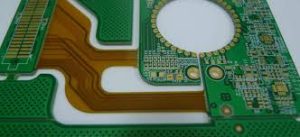
One of the primary advantages of using flex rigid PCBs in smart home devices is their ability to accommodate complex layouts and configurations in limited space. Smart home devices often have compact designs and unconventional shapes, requiring PCBs that can conform to these spatial constraints without compromising performance or reliability. Flex rigid PCBs enable designers to create custom shapes, bend angles, and three-dimensional configurations, allowing for seamless integration of components, sensors, and antennas within the device enclosure.
Moreover, the compact and lightweight nature of flex rigid pcb manufacturer is particularly advantageous for smart home devices where space and weight considerations are critical. By minimizing the footprint and volume of electronic components, flex rigid PCBs help optimize the overall size, form factor, and aesthetics of smart home devices, enhancing their compatibility with diverse architectural styles and interior designs. This allows manufacturers to develop sleek, unobtrusive, and user-friendly smart home solutions that seamlessly blend into the modern living environment.
Can an flex rigid pcb manufacturer be used in smart home devices?
Additionally, flex rigid PCBs offer enhanced reliability and durability compared to traditional rigid PCBs, making them well-suited for smart home devices operating in diverse environments. Smart home devices are often subjected to temperature variations, humidity, mechanical stress, and vibration, which can degrade performance and reduce lifespan if not properly managed. Flex rigid PCBs, with their flexible substrate materials and rigid support layers, provide superior thermal stability, moisture resistance, and mechanical robustness, ensuring the long-term reliability and durability of smart home devices.
Furthermore, the high-density interconnection capabilities of flex rigid PCBs are advantageous for smart home devices requiring complex circuitry, multiple layers, and miniaturized components. Whether it’s routing signals between sensors and controllers, managing power distribution for connected devices, or integrating wireless communication modules for remote monitoring and control, flex rigid PCBs enable efficient signal transmission, reduced signal loss, and optimized power consumption, essential for ensuring the performance and connectivity of smart home devices.
In addition to their technical capabilities, flex rigid PCBs offer cost-effective solutions for smart home devices by minimizing assembly and interconnect complexity, reducing material waste, and streamlining manufacturing processes. While the initial manufacturing costs of flex rigid PCBs may be higher compared to traditional rigid PCBs, their long-term benefits in terms of performance, reliability, and durability outweigh the initial investment, making them a cost-effective choice for smart home device manufacturers.
However, it’s essential to note that smart home devices impose specific requirements and challenges on electronic components, including flex rigid PCBs. Manufacturers must ensure that flex rigid PCBs meet industry standards such as UL (Underwriters Laboratories) certification, RoHS (Restriction of Hazardous Substances) compliance, and electromagnetic compatibility (EMC) regulations for smart home applications. Additionally, proper design considerations, such as thermal management, signal integrity, and RF shielding, are crucial for maximizing the performance and reliability of smart home devices using flex rigid PCBs.
In conclusion, flex rigid PCB manufacturers can be used effectively in smart home devices, offering a combination of technical capabilities, customization options, and cost-effective solutions that align with the requirements and challenges of this burgeoning market. By leveraging the advantages of flex rigid PCB technology, smart home device manufacturers can develop innovative, efficient, and reliable solutions that enhance comfort, convenience, and security for consumers in the modern connected home.