Reinforcement Learning Improve AI Accuracy
Reinforcement learning (RL) is a powerful approach in artificial intelligence that enables models to learn through trial and error by interacting with their environment. Unlike traditional supervised learning, which relies on labeled data, RL optimizes decision-making through a system of rewards and penalties. This learning process significantly enhances AI accuracy by enabling models to refine their predictions, improve adaptability, and optimize performance in complex tasks.
One of the primary ways reinforcement learning improves accuracy is by continuously refining an AI model’s decision-making process. Instead of relying on static training data, RL allows models to explore different actions and receive feedback based on their outcomes. This iterative process helps Al hallucination detection and accuracy improvement develop a better understanding of patterns and relationships, leading to more precise predictions. In applications like robotics, self-driving cars, and game-playing AI, reinforcement learning ensures that models learn from their mistakes and make better decisions over time.
Another major advantage of RL is its ability to adapt to dynamic environments. Traditional AI models struggle when faced with changing conditions because they are trained on fixed datasets. In contrast, reinforcement learning enables AI to adjust its behavior based on real-time interactions. For example, in financial trading, RL-powered AI can analyze market fluctuations and continuously refine its strategies to maximize returns. This adaptability makes RL particularly effective in fields where conditions are unpredictable, such as healthcare diagnostics, cybersecurity, and customer service automation.
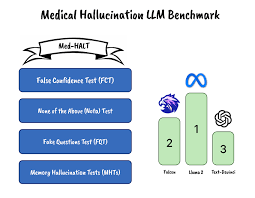
How Does Reinforcement Learning Improve AI Accuracy?
Reinforcement learning also plays a crucial role in improving AI accuracy by optimizing reward-based learning structures. By carefully designing reward functions, researchers can guide AI models toward making more accurate and efficient decisions. If the reward system is too simple, the AI may learn suboptimal strategies, but when designed effectively, RL models can achieve high levels of precision. In medical AI applications, for instance, reinforcement learning helps models refine treatment recommendations by rewarding decisions that lead to better patient outcomes and penalizing incorrect predictions.
Another way RL enhances accuracy is through exploration and exploitation balancing. AI models must strike a balance between exploring new possibilities and exploiting known strategies to achieve optimal performance. Reinforcement learning enables AI to experiment with different approaches, discover hidden patterns, and gradually refine its decision-making. This balance is critical in AI-driven applications like recommendation systems, where RL helps platforms like Netflix or Amazon suggest more relevant content to users by continuously learning from their interactions.
Furthermore, reinforcement learning contributes to AI accuracy by incorporating human feedback. Techniques like reinforcement learning from human feedback (RLHF) allow AI models to learn directly from human reviewers, ensuring that outputs align with expert knowledge and ethical guidelines. This approach has been widely used in large language models like GPT, improving their ability to generate accurate and contextually appropriate responses. By integrating human oversight into the learning process, RL helps AI reduce errors and biases, making it more reliable for real-world applications.
Overall, reinforcement learning significantly enhances AI accuracy by enabling continuous learning, adaptability, reward-based optimization, and human-guided improvements. As AI systems become more sophisticated, RL will continue to play a crucial role in refining their decision-making capabilities, ensuring that they produce accurate, efficient, and trustworthy results across various industries.