thermal management addressed in flex pcb board
In modern technology, flexible circuits are utilized in many products, from smartphones to medical devices and beyond. Their ability to bend safely and absorb shock make them ideal for applications that require a combination of flexibility, space efficiency, and high reliability. However, these types of boards have to contend with a number of unique considerations that differ from rigid PCBs. In particular, the question of how to address thermal management is a major challenge for flex circuits.
The best approach to thermal management in a flex PCB depends on the specific application, but there are some general guidelines that should be followed. These include reducing component temperatures, minimizing the temperature gradient through the board, and avoiding hot spots. These tips are important for both the design process and final manufacturing of a flex PCB.
flex pcb board must be designed with the proper bending radius to ensure that they remain stable during operation. This depends on the stack-up of the flex ribbon, as well as the static and dynamic mechanical requirements. It is also necessary to consider the operating environment, which can affect heat dissipation and stability.
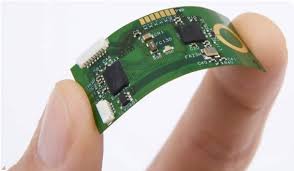
How is thermal management addressed in flex pcb board?
Static flex circuits typically need a smaller bending radius than dynamic ones. The bending radius for a dynamic flex circuit should be based on how much the PCB is expected to flex over its lifetime. A flex circuit that is expected to flex only once or twice should have a bending radius of around 1/8 inch.
The use of a heat sink, fans, and thermal vias can help improve the thermal performance of a flex PCB. Heat sinks are passive cooling devices that allow heat to dissipate from high-power components by absorbing and conducting the heat away. Fans help to enhance this effect by facilitating airflow through the board and carrying the heat away. Thermal vias are plated holes that facilitate heat transfer from the components to the copper plane, where it can be dissipated more effectively.
Another way to reduce a flex circuit’s temperature is to use tin or soft gold surface finishes. These surface finishes provide a solderable surface and prevent copper oxidation. Manufacturers can choose from a variety of surface finish options, including photo-imaged dry film, adhesive based tin, and liquid photo-imaged polymer.
To minimize movement and contraction during manufacturing, flex PCBs should be built with the appropriate drill-to-copper distance. In addition, the etch pattern should be optimized to minimize drill-to-copper gaps and improve etch yields. This includes selecting pad-only plating (button plating), which uses a thinner layer of copper that is deposited only on the pads and vias.
The IPC-6013 standard provides a comprehensive set of guidelines for the qualification and acceptance of flex and rigid-flex circuit boards. It defines different classes of flex and rigid-flex PCBs and outlines quality assurance provisions, including a variety of test methods. The IPC-6013E version, which was released in 2021, has been updated to reflect new test methods for flex and rigid-flex circuits.